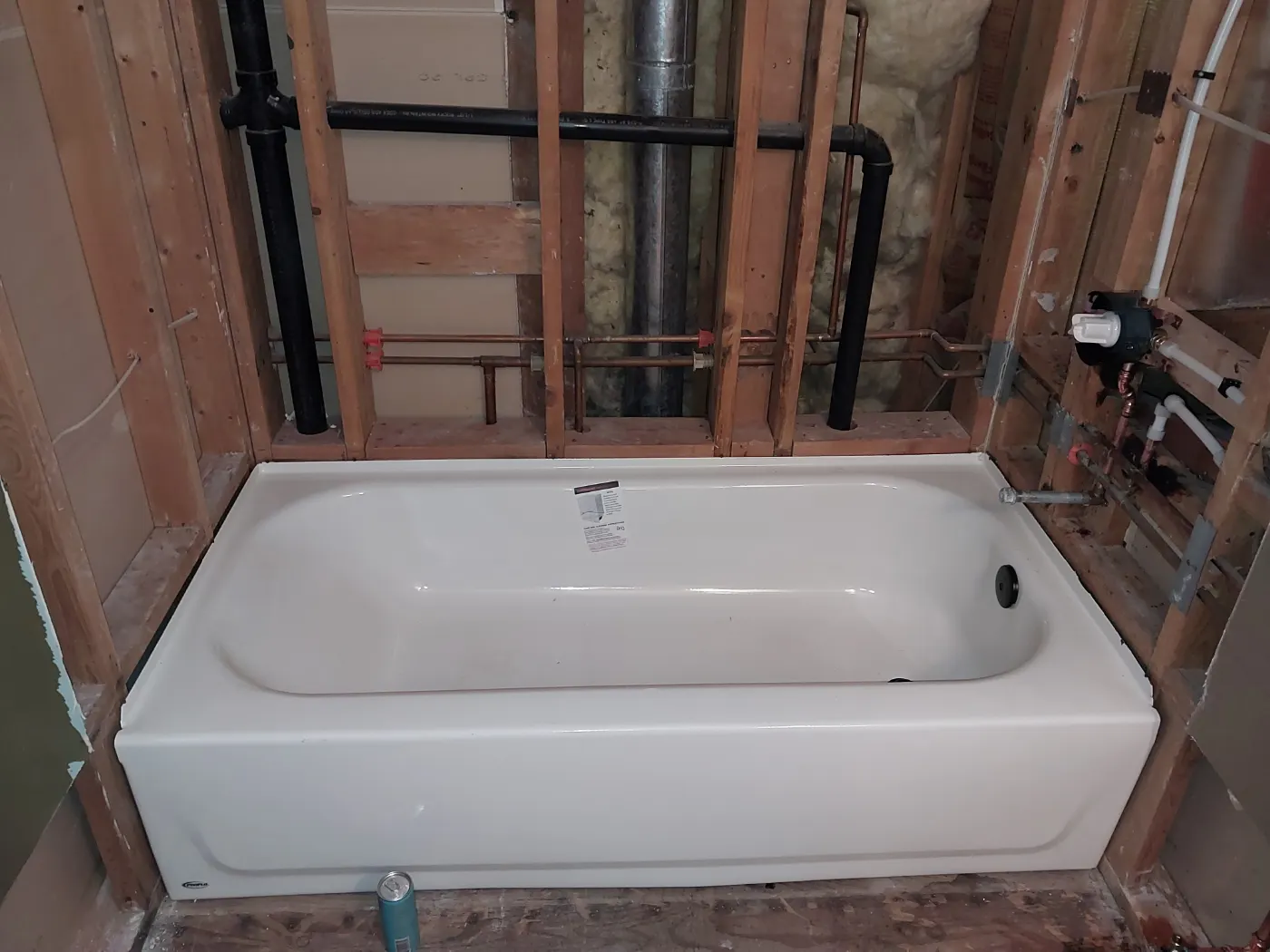
Rough-in plumbing
Water distribution, drain, waste and vent piping, and valve installation.
- Licensed, bonded & insured
- Bilingual crews
- Townhomes & row houses
Why the first unit sets the standard
Townhomes and row houses repeat. Rough-in is where that works for you, or quietly against you, unit after unit.
Why is the first unit so important?
Because it becomes the template. Townhomes and row houses repeat, often mirrored across a shared wall, so kitchens and bathrooms line up unit to unit. Get the first one right and the rest go in clean. Get it slightly wrong and the same problem is built into every unit down the row, which is why the first unit is worth a walkthrough with the builder before the rest are roughed in.
Why does plumbing care so much about framing layout?
Because drains need slope and space. A drain line has to fall continuously to work, typically a quarter inch per foot on smaller lines, and it can't simply bend around a joist the way a water line can. A 3-inch drain stack also usually needs a wall thicker than a standard 2x4. If the layout isn't settled with the framer early, drains end up notched through structural members or rerouted in ways nobody planned.
Why do some builders use cast iron for the drain stacks?
Noise. Water falling through a plastic drain stack is surprisingly loud on the other side of the wall, and in townhomes that wall is often a neighbor's bedroom. Cast iron is heavier and much quieter. It also costs more, so it's often used selectively on the vertical stacks, where the noise matters most.
What is DWV venting actually for?
Every drain needs air behind the water. Vent pipes run up through the roof so water flows freely, and so the trap under each fixture keeps its water seal, which is what stops sewer gas from coming into the home. A drain that gurgles in a finished house is often a venting problem that started at rough-in.
Planning a build?
Send us your plan set for a bid and takeoff, or call to talk through the schedule.